
Sleuthing the of your vintage costume jewelry can be fun! In addition to maker marks, there are lots of clues to help you figure out the age of your costume (and sometimes fine) jewelry, from clasps to color. Not all clues are definitive, and you may have an older peice of jewelry that has been repaired with newer clasps, so taking everything into account can help you figure it out. Here are some quick and easy ways to help you date yours.
-
Costume Jewelry Clasps and Fasteners
-
Costume Jewelry Materials
-
Costume Jewelry Styles & Decades
-
Costume Jewelry Manufacturers
Clasps & Fasteners
Brooches
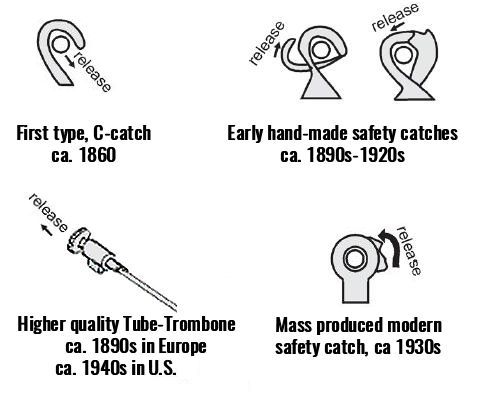
C-Catch
The earliest catches were simple bends of metal shaped like the letter C. The pin was kept within the C with tension created by the pin against the fabric to which it was attached. The C catch was in use from about 1850 to 1910.
Safety Catches
Around 1890, jewelers begin to create more secure catches. These hand made efforts are the first so called "safety catches". Early safety catches, like tube hinges, are hand made, usually made by the same person who made the brooch. Because they are hand made, the early safety catches show lots of variation from simple to very complicated. These generally were made through the 1920s.
The Push-pull Trombone catch was patented in Britain in 1850 and was used prior to 1890. These didn't become popular in the US until the 1940s.
Modern Safety Catches
The safety catch used today is essentially the same one that first became widespread in the late 1920s and early 1930s. It is machine made with a rotating jaw that locks the pin in the catch.
Pins
In general, the thicker and heavier the material of the pin itself, the older the pin. Heavy pins were acceptable in the loosely woven natural fabrics of the 1800s. The finer weaves and increasing use of synthetic fabrics in the 20th century required pins that were progressively thinner and lighter in weight.
Another clue to age provided by pins is how far they extend beyond the catch. Pins used in mid-1800s brooches commonly extend from 1/8" to 1/4" beyond the catch. Many pins of this period may also extend that same distance beyond the edge of the brooch itself.
Earrings
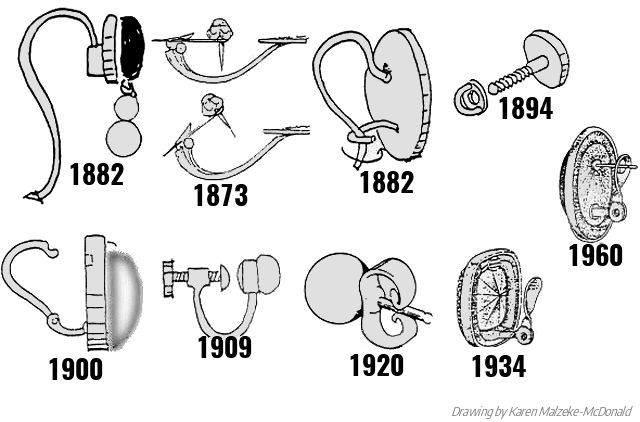
Hook styles can help you date your vintage earrings. Although there was a lot of crossover in years, and some styles made a comeback - this image shows the styles when they were first introduced into the market.
In order of date, the styles are named as follows: shepherd hook, image two is not named, kidney wire, screw-back (pierced), lever back, screw-back, post & butterfly, spring clip, and omega back.
Some of these styles are still made today. Thread stud earrings from 1890 are thicker in diameter, and the nut is much heavier than those that are made today. Screw-back non-pierced earrings that were made in 1900 are still made today, but they are not that common on newer pieces. Kidney wires were invented in the 1870s and are also still used today. The shape has been modified in the modern earring. Knowing the difference between all of these can be helpful when determining the date of your jewelry. As with brooches, the heavier the material (say, brass vs wire) can also help determine age.
Materials
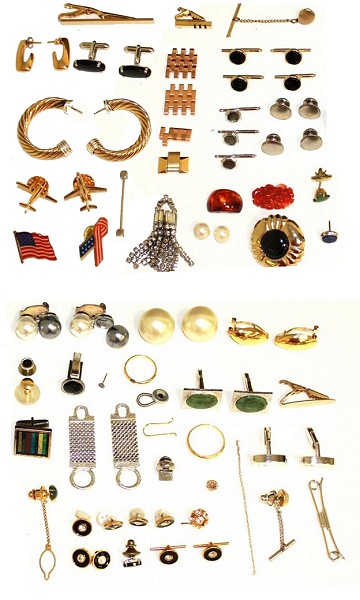
The core of costume jewelry is in the fact that it is affordable and uses base metals and non-precious materials. Knowing the type of materials used in costume jewelry design can help you recognize the high-quality pieces and distinguish them from low quality pieces. Materials like gold plating, Austrian crystals, enamel, bakelite, and rhinestones are popular in vintage costume jewelry. Enamel pins in the form of animals, plants, and figures show the craftsmanship and ability of the designers to work with materials for beautiful costume jewelry pieces.
Metals
- Base Metals: These include brass, copper, and zinc, which are often used as the core material for costume jewellery. These metals are durable and provide a sturdy base for various coatings and finishes.
- Gold-Plated and Silver-Plated Metals: To give costume jewellery a luxurious look, base metals are frequently coated with a thin layer of gold or silver. While these pieces are not solid gold or silver, they offer a similar appearance at a fraction of the cost.
- Rhodium-Plated Metals: Rhodium, a member of the platinum family, is used to plate base metals to give them a shiny, reflective finish. This plating is often applied to imitation silver pieces to enhance their luster and durability.
- Stainless Steel: Known for its strength and resistance to tarnish, stainless steel is another popular choice for costume jewellery. It's a bit more expensive than base metals but offers greater longevity.
Components / Gems
- Bakelite: An early plastic prized for its rich colors and collectible appeal, especially in bracelets and brooches.
- Lucite and Acrylic: Transparent or colored plastics popular from the 1940s to 1960s.
- Rhinestones and Austrian Crystals: High-quality rhinestones with excellent sparkle raise value.
- Enamel: Pieces with detailed, vibrant enamel work are highly sought.
- Glass: Hand-cut or Venetian glass beads denote artisanal quality.
Styles & Decades
Costume jewelry has been around for almost 300 years, as jewelers began experimenting with inexpensive types of glass as early as the 19th century. Through the decades, costume jewelry styles have evolved due to changing social and political trends, typically mirroring the larger trends of the fine jewelry world.
Knowing the various styles, pieces, and designers that each decade is known for will help you date your costume jewelry.
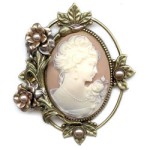
- Victorian jewelry: Mid to late 1800s and often feature intricate designs, floral motifs, and romantic themes.
- Art Nouveau jewelry:Late 1800s and early 1900s and often features organic, flowing designs inspired by nature.
- Art Deco jewelry: 1920s and 1930s and is known for its geometric shapes, and use of bold colors.
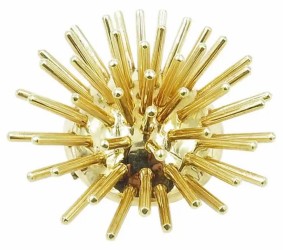
- Mid-Century Modern jewelry: 1950s and 1960s and is known for its clean lines, geometric shapes, and use of materials like Lucite and plastic.
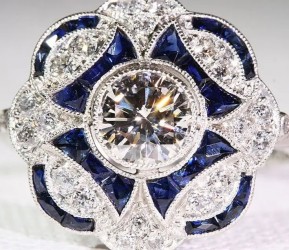
- Retro jewelry:1940s and 1950s, often featuring large, bold designs emphasizing glamour and luxury, along with finer-shaped floral motifs.
Costume Jewelry Styles
Victorian Style
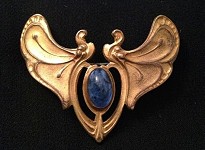
Art Nouveau Style
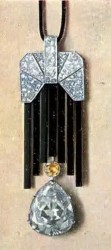
Art Deco Style
Mid Century Style
Retro Style
1920s Costume Jewerly
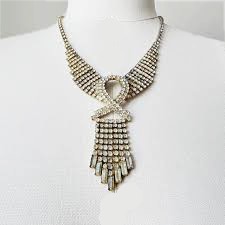
Much of the costume jewelry created during the 1920s was made with the intention of resembling precious jewels as closely as possible, which led to the use of materials like white metals, richly-colored stones, and faux pearls. During the 1920s, women began wearing their hair bobbed, creating the perfect opportunity to show off statement earrings. Long, dangling necklaces that enhanced the wearer’s neck and moved while they danced were popular. Pearls also came into fashion during this time period. The Art Deco movement also influenced the design of costume jewelry during this time, leading to pieces with strong color contrasts, geometric shapes, stylized motifs, and clean lines.
- Typical pieces of the roaring twenties:long earrings, long and short necklaces, narrow bracelets, brooches
- Materials: white metals, clear and colored glass stones and beads, faux pearls, and marcasites
- Popular designers: Chanel, Elsa Schiaparelli
1930s Costume Jewelry
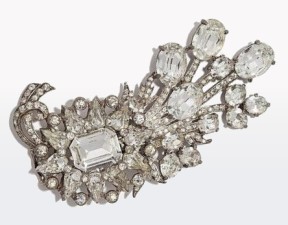
During the 1930s, costume jewelry became a necessity due to the impact of the Great Depression on consumers’ disposable incomes. An increased focus on accessorizing existing clothing prompted jewelry makers to begin experimenting with new types of pieces. This led to the creation of the dress clip, which quickly became the quintessential jewelry piece of the decade. The Art Deco style evolved, leading to the Art Moderne style.
- Typical pieces: double clips, double-clip brooches, pendant earrings, necklaces, bracelets, and brooches
- Materials: molded glass, Bakelite, inexpensive plastics
- Popular designers: Ciner, Trifari, Eisenberg, Coro, Boucher
1940s Costume Jewelry
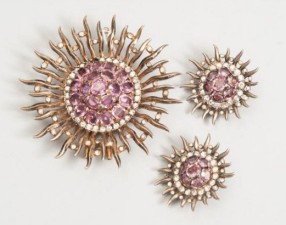
When World War II began, the conflict had a quite an impact on jewelry styles. Most notably, jewelry became a subtle, feminine addition to a more masculine and sensible fashion look. During this time, costume jewelry sales soared. The quality of pieces also improved greatly during this decade, as many jewelers switched away from creating fine jewelry during the Depression and many skilled workers fled Europe during the war.
One of the biggest changes to costume jewelry during this time period was that sterling silver replaced base metals due to wartime restrictions. Seed pearls and imitation turquoise, coral, and jade were also used due to shortages during the war. Other notable materials during this time included wood, leather, Bakelite, Lucite, and plaster.
- Typical pieces: brooches, bracelets, ear clips, necklaces, and double-clip brooches
- Materials: sterling silver, wood, leather, Bakelite, Lucite, natural shells, plaster, and ceramic
- Popular designers: Trifari, Weiss, Eisenberg, Hobe, Coro, Juliana, Ciner
1950s Costume Jewelry
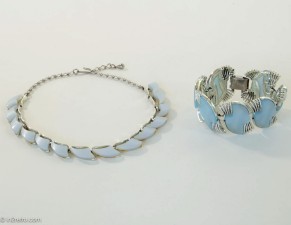
During the 1950s, it became fashionable for women to perfectly match every accessory of their outfit, and this preference for matching sets extended to costume jewelry. The most sought-after item of this decade was the “simple strand of pearls” that was used to dress up any outfit. During this time, gold-toned jewelry eclipsed silver in popularity as there was a desire for extravagant accessories. One of the most prominent characteristics of costume jewelry of this decade was an innovative use of color.
- Typical pieces: cluster earrings, pendant earrings, bib necklaces, brooches, bracelets, and jewelry sets
- Materials: decorative beads, art glass, textured metals
- Popular designers: Christian Dior, Weiss, Hobes, Juliana, Ciner
1960s Costume Jewelry
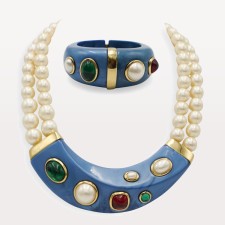
During this period, costume jewelry designers started to experiment with innovative techniques and materials, and began producing designs made with less expensive components. With the rise of mass production and technology advancements, plastics became more popular in jewelry design and fashion became more accessible for every woman.
Later in the decade, Pop art and Op art both had a big influence on costume jewelry designs. Notable styles include oversized accessories, global styles, and bright colors. Floral designs and bright colored bangles were also popular. Bold color combinations were seen in jewelry design throughout this decade, and many of the pieces were created with the goal of creating shocking visual impact.
- Typical pieces: large pendants, hoop earrings, ball drop earrings, and multi-strand necklaces
- Materials: decorative beads, art glass, textured metals, plastics, vinyl, and Perspex
- Popular Designers: Kenneth Jay Lane
1970s Costume Jewelry
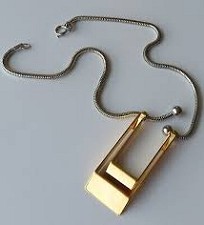
During the 1970s, multiple costume jewelry styles were popular. Geometric pieces were fashionable during this time, as were bohemian pieces with global influences. The birth of disco also impacted costume jewelry, adding more sparkle and bling to pieces.
Chunky chains and layered necklaces were also in style, with many marketed as "unisex". Popular costume jewelry pieces from this period come in unusual colors and shapes. Colors used in jewelry during this time included burnt orange, olive green, brown, yellow, and cream. During this decade, there was an emphasis on using natural materials like wood, stone, shell, and bone.
- Typical pieces: chains, pendants, bangles, dangly earrings
- Materials: wood, stone, shell, and bone
- Popular Designers: Coro, Haskell
1980s Costume Jewelry
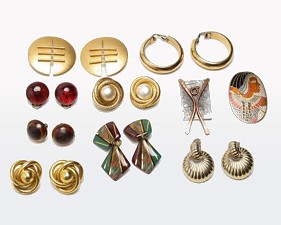
During the 1980s, costume jewelry made a statement - fashions were bold, and the jewelry matched. Necklace styles ranged from beaded to large pendants. Gold was a popular metal, and costume jewelry allowed many women to wear large gold-plated pendants that were much more affordable. Pearls also had a resurgence, and women wore imitation pearls of all colors in bunches and with their ends tied in knots. Bold brooches also came back in to style, as these pieces were seen as another way to make a big fashion statement.
- Typical pieces: big brooches, large hoop earrings, beaded necklaces, jelly bracelets, cocktail rings
- Materials: imitation pearls, faux gemstones, gold-plate
- Popular Designers: Vivienne Westwood
Popular and Valuable Costume Jewelry Makers
Many costume jewelry pieces are unmarked, but there are popular manufacturers to look out for. These highly collectible makers may also be as valuable as they are beautiful.
|
|
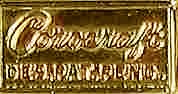
Coro / Corocraft - 1901-1979Coro was a costume jewelry company founded in the early 1900s in New York City. They were known for their affordable, high-quality pieces that were often inspired by high-end jewelry designs. |
|
|
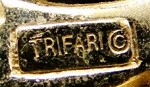
Trifari - 1910s-PresentTrifari became one of the most prominent brands in costume jewelry during the early 20th century. The brand was known for its craftsmanship and signature pieces like the "Crown Trifari" brooches. With designs often made of sterling silver and rhinestones, Trifari's sophisticated and high-quality pieces were adored by the fashion-forward for decades. |
|
|
Eisenberg - 1930s-1970sEisenberg was a costume jewelry company that was founded in the 1920s in Chicago. They were known for their high-end designs and use of high-quality rhinestones and other materials. |
|
|
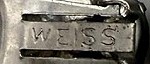
Weiss - 1942-1971Weiss was a costume jewelry company that was founded in the mid-1940s in New York City. They were known for their high-quality materials and innovative designs, and collectors highly prize their vintage pieces. |
|
|
Sarah Coventry - 1949-1984The Tupperware of Costume Jewelry. They recruited both men and women to host house parties to show off the affordable Sarah Coventry jewelry Unlike other major fashion jewelry houses, Sarah Coventry didn't employ a head of design, nor manufacture their own pieces. Instead, they utilized freelance designers and commissioned companies in Rhode Island and New Hampshire to manufacture specific pieces. At its peak in the mid-1960s, Sarah Coventry was selling around 35,000 pieces of jewelry every workday, and expanding its accessory lines to include men's jewelry, women's watches and belts. Items are still sought out today. |
|
|
Lisner - 1904-1985Lisner was a costume jewelry company that was founded in the 1900s in New York City. They were known for their affordable, high-quality pieces that were often inspired by high-end jewelry designs. |
|
|
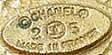
Coco Chanel - 1920s-PresentNo list of influential costume jewelry brands would be complete without Coco Chanel. In the 1920s, Chanel democratized jewelry by making costume pieces a staple of high fashion. Her use of faux pearls, chains, and bold designs made costume jewelry fashionable rather than a mere imitation of fine jewelry. Chanel believed jewelry should be essential to a woman's wardrobe, and her iconic designs remain timeless. |
|
|
Elsa Schiaparelli - 1930s-1950sElsa Schiaparelli, a true avant-garde artist, blended fashion and art to create daring and surreal jewelry. Collaborating with artists like Salvador Dalí, this visionary designer created pieces that pushed boundaries, incorporating unexpected materials and motifs. Her bold, whimsical designs from the 1930s are still coveted by collectors today and have had a lasting impact on jewelry design. No wonder she takes a top spot in our list of topcostume jewelry brands. |
|
|
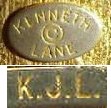
Kenneth Jay Lane - 1963-PresentKnown as the "King of Costume Jewellery," Kenneth Jay Lane revolutionized the costume jewelry brands with his glamorous yet affordable pieces. His jewelry was beloved by celebrities like Jackie Kennedy and Elizabeth Taylor, making high-end style accessible to the masses. Lane's use of crystals, pearls, and gold-plated metals continues to inspire contemporary designers. |
|
|
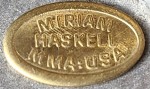
Miriam Haskell - 1920s-PresentIntricacy and elegance define Miriam Haskell's designs. Her jewelry was hand-made using a variety of materials such as glass beads, pearls, and filigree. Known for her feminine and floral designs, Hollywood stars often wore Haskell's pieces in the 1940s and 1950s. Her vintage collections are highly collectible and admired for their artistry and craftsmanship. |
 |
Hobé - 1920s-1990s
Hobé costume jewelry is known for being tasseled, beaded, and having floral designs. Jacques Hobé started the company in Paris, but his son William moved the company to America and is most well-known for designing costume pieces used in Hollywood and worn by actresses. I was a favorite of the Ziegfeld Follies. |
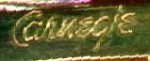 |
Carnegie - 1918-1970sHattie Carnegie was an immigrant to the U.S. from Austria. Her jewelry designs feature Swarovski crystals, gold mesh, florals, and animals. The Carnegie logo is stamped on pieces made both by her company and those commissioned outside her company; the logos may simply be her name, her initials, or even Miss Hattie. |
|
|
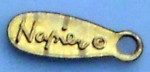
Napier - 1922-1999For much of the 20th century, Napier was a leading name in American costume jewelry. Known for its versatility and quality, Napier created everything from classic gold-tone designs to bold, modernist pieces. Their jewelry was popular for its affordability and high-quality craftsmanship, making it a staple for women across America. |
|
|
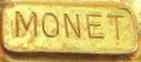
Monet - 1929-PresentMonet became famous for its timeless, everyday costume jewelry. Founded in 1929, Monet's designs often featured gold and silver-tone metals, rhinestones, and enamel. Known for their durability and elegance, Monet's pieces were beloved by women who wanted stylish, affordable jewelry that stood the test of time. |



Happy Hunting!
Sources: The Spruce | Trufax Jewels | The Spruce | AZ Central
Cause A Frockus Vintage Costume Jewels| Love to Know
Always Treasured | Love to Know | Vintage Dancer